
Getting away for New Year’s Eve in Australia
Celebrating New Year’s Eve is very exciting – and it’s also a great excuse for a local getaway over the holidays!
If you plan to travel over the break and celebrate New Year’s Eve in another city, town or regional location, here’s what you should know.
Accommodation options
Accommodation options in Australia range far and wide, so your choice is huge. Depending on where you want to go and what you want to see and do on NYE, you can:
- Stay in a major hotel or resort
- Choose from other options like serviced apartments, B&Bs, motels and youth hostels
- Rent a holiday home for your family or a group of friends
- Camp out in the wilderness or in a caravan park
Whatever you do make sure you book your accommodation early. Rooms often book out fast (sometimes a year in advance) and prices can also jump up significantly for NYE.
Keep in mind that many establishments will have a 2-3 minimum night stay over the holidays too.
Watching the fireworks
There are hundreds of places where you can see New Year’s Eve fireworks around Australia, whether you’re in a big city or a more rural spot.
- Major Aussie cities will usually hold key fireworks events around the harbour, water or inner city; make sure you show up early in the day if you plan to picnic and hang out until night time (in popular places, spots fill up fast, so you might not even be allowed in! In Sydney, for example, numbers can reach 1.6 million people around the harbour foreshore alone) (Source: www.sydneynewyearseve.com/fireworks/)
- If you prefer not to be in the central business district, look for fireworks displays and celebrations in other locations near beaches, lakes, rivers or parks
- Rural towns and locales will often hold their own fireworks displays and celebrations usually include things like live music and market stalls
- In Australia, some cities or towns will hold two fireworks shows on the night: One at 9.00pm (great for kids and families who don’t want to stay out late) and the official display at midnight
Eating & drinking out
Eating and drinking out is one of the best bits of New Year’s Eve celebrations.
- If you’re picnicking or camping out, plan ahead and check the regulations on alcohol and what you can/can’t bring with you (e.g. around Sydney Harbour, many firework vantage points are alcohol-free zones) (Source: www.sydneynewyearseve.com/plan-ahead/watching-the-fireworks/)
- If you prefer to have a designated seat for the whole night, you can also book a table in a café, restaurant or bar. This will usually involve paying a package cost for dinner and drinks. If you’re keen to splurge, check out establishments close to the fireworks; otherwise, bargains can often be found elsewhere
- In more remote areas, food and market stalls are common and are a great option for food and drinks on New Year’s Eve
Transport
Researching transport in your local area on New Year’s Eve is also a must. Taxis can be difficult to get and even public transport options can be packed, so plan ahead carefully.
Melbourne, for example, has major transport shut downs and road closures on New Year’s Eve. (Source: www.thatsmelbourne.com.au/nye/plan-ahead)
- What transport options are there to/from your desired spot?
- What time will public transport run to?
- Will there be shut down times after the fireworks?
- What about delays?
If you prefer to be within walking distance of your hostel or accommodation, book early to avoid missing out.
Weather
December and January can be extremely hot in Australia. Make sure you:
- Dress accordingly in light clothing
- Use sunscreen and protect yourself from the sun if you’re going to be out during the day
- Drink plenty of water throughout the day (and night) to stay hydrated
- Stick to shady areas if it is extremely hot
Travel Insurance
- Did you know that over 285,000 Australians travelled domestically in 2014? (Source: www.tra.gov.au/statistics/domestic-travel-by-australians.html)
If you are going to be travelling domestically within Australia, protecting yourself, your family and your possessions with domestic travel insurance is advisable.
Domestic travel insurance can help you cover emergencies and mishaps such as:
- Last minute emergency cancellations
- Flight and travel delays
- Lost, stolen or damaged luggage or possessions
- Lost or stolen cash
- Accommodation, meals and travel expenses cover in the event of an emergency
Remember, anything can go wrong on any type of trip, even when you travel in Australia, so ensuring you’re covered could save you hundreds.
A quick guide to NYE in the capital cities
- Sydney holds a major fireworks event in around the harbour, with much focus on the Harbour Bridge; get organised ASAP if you want to spend NYE in Sydney, as it can get packed out fast
- Melbourne’s celebrations take place around the Yarra River, with fireworks displays shooting off high rises around the city; picnicking is possible or you can secure at seat at any of the Southbank restaurants
- If you’re in Brisbane, Story Bridge is the place to be for fireworks and major celebrations; and on the Gold Coast, you can catch the fireworks display from the beach
- Canberra backpackers should head to Civic Square for two cool fireworks displays (9pm and 12am), as well as a tonne of live music and bands
- In Perth, amazing foreshore fireworks displays are accompanied by a huge street party at Northbridge; there are also a bunch of NYE music festivals you can attend
- The River Torrens is the spot to head to in Adelaide, with two fireworks displays to boot; the night is accompanied by live music, food stalls and even a beer garden
- In Darwin, celebrations often kick off earlier in the afternoon, with plenty of live entertainment, and a 9pm fireworks show for all on the Waterfront
- Hobart is ideal if you’re a foodie or just want to backpack in one of Australia’s most gorgeous wilderness spots; the Taste of Tasmania food festival and the fireworks are the two main events here
For further info on New Year’s Eve events in the major cities, visit Tourism Australia
Travelling domestically for Christmas or New Year’s? Get a fast quote below:
How to Compare Travel Insurance – Levels of Cover, Benefits & More
Comparing your travel insurance choices is often the best way to obtain the most competitive travel insurance cover for your trip. But what sorts of things should you compare and review? And how can you be sure your chosen travel insurance could mean the ultimate care-free journey?
1. Levels of Cover
When comparing travel insurance packages, it is beneficial to understand how much insurance cover you need.
- Make a list of all the areas that you want insurance for and decide how much cover you need for each (e.g. $2,000 or $10,000?). This can make it much easier to see which providers can give you the level of cover you are looking for
- Cover you might want to make a priority in your policy can include: medical, hospital, baggage, valuables, trip cancellations, emergency flights home, delays (travel or baggage), sports/activities equipment or business equipment
2. Pre-Existing Medical Conditions
- When comparing your travel insurance choices, consider the terms each provider has about pre-existing medical conditions; it could be beneficial to look for a provider who is more accepting of your condition than others
- Providers who don’t require medical certificates and documentation upfront (i.e. until you make a claim) can also make the comparing and choosing process much easier
3. Medical Cover
Medical cover is one of the most standard inclusions in all travel insurance policies. However, it is a good idea to compare the different medical entitlements and limits offered by each provider and to make sure that the medical coverage you choose will satisfy your needs.
4. Sports & Activities
If you will be engaging in high risk sports or activities during your trip, it is important to secure cover for these also.
- When comparing your travel insurance choices, consider which policy or upgrade will bring you the most beneficial cover for your intended activities
- You should also keep an eye out for various limits placed on your chosen activities, such as diving to a certain depth or white water rafting to a certain level
5. Excesses
Excesses are sums of money you will be required to pay before your travel insurance provider will begin paying your claims.
- Comparing excesses is usually quite easy and will give you an idea of which provider offers more competitive excess amounts
- You can also look out for providers that offer flexibility in the way of excess waivers (so you won’t have to pay an excess when claiming) or increased excesses (to keep your premiums down)
6. Exclusions
Exclusions will be common to most policies. You should be able to compare your travel insurance exclusions by reviewing your policy and your Product Disclosure Statement.
7. Additional Benefits
It’s often the small things that count! Additional benefits included in your travel insurance can make it all the more appealing. You might want to consider looking out for 24/7 emergency support, free cover for children, easy approval and claims processes.
The Product Disclosure Statement (PDS) can also assist in comparing which level of cover is right for you, so make sure to read this or contact our customer service agents before you buy to understand your options.
If you need help comparing your travel insurance choices or simply deciding what type of cover is right for you, InsureandGo can help. Get in touch with our friendly travel insurance team today!
How Much Does Travel Insurance Cost?
The cost of travel insurance will vary depending on a range of factors about your trip, such as:
- What country/countries you are visiting
- The type of trip you are taking
- The length of your trip
- The activities you will be participating in while away
Other individual factors that can also impact your travel insurance costs include things like age, pre-existing medical conditions and the level of cover or limits you would like.
Options that can affect your total travel insurance costs
Depending on what levels of cover you need for your trip, optional extras can also increase your premium slightly. These options can include insurance cover for:
- Travel delays
- Trip cancellations
- Baggage delays
- Passport, documents and cash
- Extreme or dangerous sports/activities
- Excess waivers on claims
- Journey resumption after cutting your trip short or returning home
- Equipment for golfing or skiing
- Rental vehicle excess waivers
- Additional valuables like iPads, cameras, phones, jewellery
- Personal liabilities and legal expenses
- Pet care if your return trip is delayed and your pet is in boarding
- Loss of income due to injuries while travelling
How can I lower the cost of my travel insurance?
While it’s important to ensure your travel insurance can cover your trip, it is possible to lower the cost of your premiums. You can:
- Increase your excesses on claims (i.e. the amount you have to pay before the insurance company will pay you)
- Consider a multi-trip package if you travel frequently
When choosing your policy, it is essential to make sure that the limits will cover your costs should something go wrong. Remember, just because a policy is cheaper doesn’t mean it is better!
What about cover limits and levels?
Limits are the total amount that the travel insurance company will pay for any one item or area of coverage. The better the level of cover, the higher the limits will usually be. This usually means that your premiums will be slightly higher, but in return, you will be getting a more comprehensive level of cover that can save you thousands if an accident or mishap occurs.
Travel tips for a New Zealand holiday
New Zealand, or the Land of the Long White Cloud, is an amazing place to visit. With snow-peaked mountains, unforgettable coastlines, gorgeous lakes and quirky cities and towns, there’s endless travelling fun to be had here.
At InsureandGo, our priority is to make sure you travel safely on your New Zealand trip, whether you’re enjoying a coffee in Auckland, kayaking in Fiordland or exploring the Bay of Islands. We encourage you to take out travel insurance New Zealand holidaymakers buy to get peace of mind for their travels.
Pre-existing conditions
No matter what your pre-existing condition is, we’ll consider it at InsureandGo.
When you take out travel insurance, with us you must declare all pre-existing medical conditions. We consider pre-existing conditions to be any illness or condition that you have been diagnosed with or treated for in the past five years.
If you’re unsure whether your condition is coverable, all you need to do is ask us. You won’t need to provide any medical documentation or undergo any physical assessments unless you make a claim.
Read more about getting travel insurance for pre-existing conditions or call 1300 401 177 and we can answer any question you may have.
Adventure sports & accidents
New Zealand is an adventure sports playground and many travellers head here to get their adrenalin pumping. Whether you choose to ski, hike, bungee jump or kayak, it’s important to remember that accidents can always happen.
- Make sure your travel insurance policy with InsureandGo covers ALL the sports and activities you plan to undertake in New Zealand; make yourself aware of what situations/circumstances are covered and what might exclude you from cover
- If you injure yourself while in New Zealand, seek medical help immediately
- If your accident is not an emergency, you (or someone you’re with) should contact InsureandGo as soon as possible – we can help you find your nearest medical facility and arrange transport for you if necessary
- If you contact InsureandGo before your treatment, we will also be able to send a ‘guarantee of payment’, if necessary, to the medical facility to cover your treatment costs (assuming you are covered)
Car rentals
If you plan to hire a car while in New Zealand, you should make sure you’re insured. Most InsureandGo policies will cover you for car rentals while in New Zealand, however, your specific policy will explain exactly what driving circumstances you are/aren’t covered for (so read this carefully). Remember:
- You must hold a valid Australian driver’s licence and comply with all rules/regulations while driving your vehicle to be eligible for insurance claims
- If you have selected an InsureandGo Gold International policy, you will be covered for up to $8,000 in rental car excesses (compare travel insurance levels of cover here)
- You need to obey all terms and conditions set out in your contract with the vehicle rental company; failure to do so will mean your travel insurance cover won’t be valid
- You won’t be covered if you drive your vehicle off road, if it has more than nine seats or if you hire it for more than 15 days
Skiing and snow sports
New Zealand is one of the best and most beautiful places to indulge in a range of snow sports. If you plan to hit the snow, you’ll need to purchase InsureandGo’s Winter Sports upgrade.
- Our Winter Sports package covers you for 14 different activities, including skiing, snowboarding, tobogganing, ice skating, cross-country skiing and more (all sports must be undertaken at a commercial resort)
- Your own skiing equipment and your lift pass will also be covered in case of loss, damage or theft
- You’re also covered for additional travel expenses that you need to pay if an avalanche delays your arrival and/or departure
- Keep in mind that if you only purchase InsureandGo Bare Essentials, you will not be covered under the personal accident section of your policy for any winter (or other) sports
Snorkelling & scuba diving
There are many wonderful places to snorkel and dive when in New Zealand. You should check that snorkelling and/or scuba diving is covered by your InsureandGo travel insurance policy. If you choose to dive, you’ll need to ensure that:
- You are a qualified diver or that you only dive with a qualified instructor
- You only dive up to depths of 30 metres (you won’t be covered if you dive deeper than this)
- You never dive by yourself
Theft & belongings
New Zealand is generally a very safe place, but that doesn’t mean that thefts won’t still occur. To keep your belongings safe, make sure they are under your watch at all times and never leave them unattended or with a stranger.
If you do experience any incidents of theft while in New Zealand, report it to police immediately and obtain a copy of the official report for your travel insurance claim.
Is New Zealand next on your travel agenda? Start your quick InsureandGo quote here or call our friendly team on 1300 401 177 to apply.
How to keep your passport safe abroad
11th of December, 2019
The latest figures show that over 15 million Aussies have a current passport, though, while we like to pride ourselves on being seasoned travellers, we continuously rank at the top of the list for countries that have the highest prevalence of having them lost and stolen.
Last financial year alone, over 30,000 passports were reported lost or stolen, and over 9,000 emergency travel documents had to be issued to help get Australians abroad back home. Keeping your passport safe is vital to making sure you’ll be allowed to enter foreign countries and return home to Australia.
Losing your passport will risk spoiling your holiday plans, and you will most likely need to pay a visit to the nearest Australian embassy or consulate. So, today, we’ve put together some helpful tips for keeping your passport safe abroad.
Read on for information about the dangers your passport may face while travelling abroad and what to do if your passport is lost or stolen.
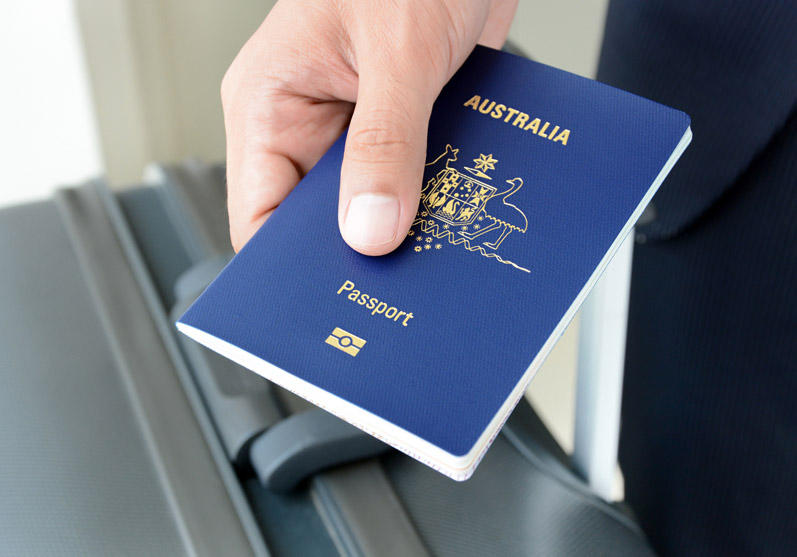
Protecting your passport before your trip
To be able to protect your passport, you first have to receive it from the government.
Most countries require your passport to be valid for at least six months from the moment you arrive in the country. If you notice your passport will soon expire, or if you have never had a passport, it is important not to wait until the last minute to apply for one.
It can take up to three weeks to receive a new passport, although you may be able to obtain it in a matter of days if you lodge your application at a selected Australia Post location and choose the Passport RAPID Service option.
Note that this priority processing comes at a much higher fee. Some countries may require you to get a visa in your passport before you arrive. If you are required to submit your passport to an embassy or consulate to get a visa placed in your passport, be sure to use registered post to mail your passport for your visa application.
This will allow you to track where your passport is, and submitting a prepaid self-addressed envelope will help make sure your passport gets to you. Once you have your passport, storing it in a safe will provide protection when not in use.
Make sure to keep track of how many blank pages you have left for new passport stamps, and always make sure you book travel tickets using the exact name that is displayed on your passport, something that can be an issue if recently married and taking a new last name.
Before heading off on your holiday, your preparation may include purchasing travel insurance. A travel insurance policy can help you assist in paying the costs of replacing your passport while overseas if it’s lost, stolen or damaged during your trip so that you may continue with your travels and return to Australia.
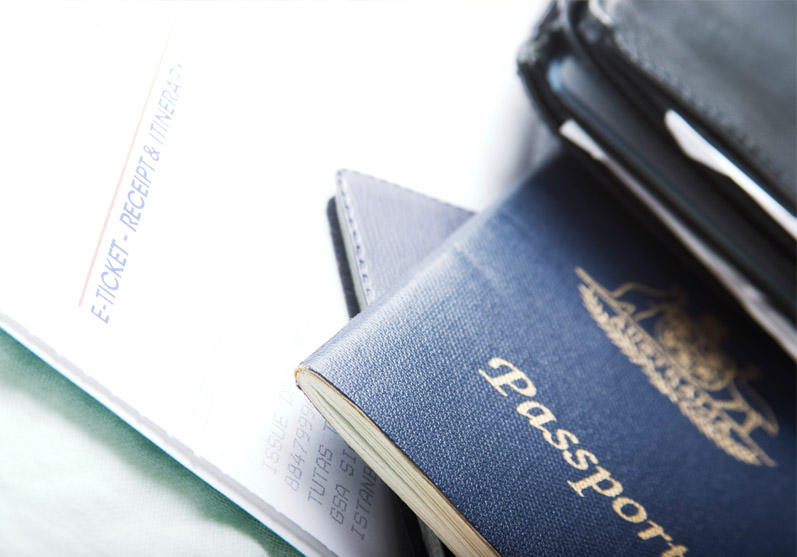
Place emergency contact information inside your passport
Your passport has a page dedicated to placing your address and emergency contact information.
Anyone who finds a lost passport is encouraged to submit it to the nearest Australian passport office, consulate, or local police station.
Filling out the requested personal details and emergency contact information in your passport will make it easier for authorities to get your passport back to you quickly or to notify family members if something happens to you during your travels and you are unable to contact them yourself.
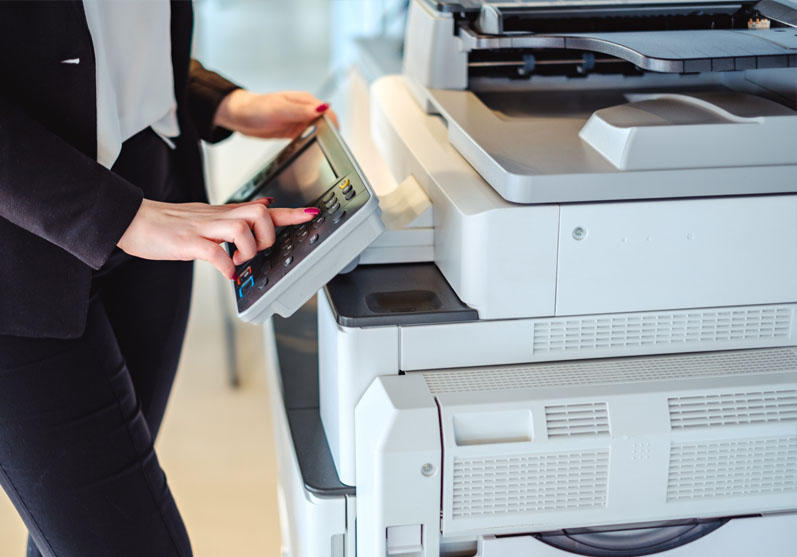
Make copies of all your passport information
Before you depart for your holiday, be sure to make copies of your passport.
While the personal details page is the most important page to copy, it is also a good idea to copy pages with passport stamps and visas.
Keep a physical copy of your passport in a separate location from your real passport throughout your travels, and keep a digital copy in Dropbox or email it to yourself so that you may easily access it worldwide should you lose both your original passport and physical copy.
Having copies of your passport details will speed up the process of getting a replacement passport should yours be lost or stolen while travelling.
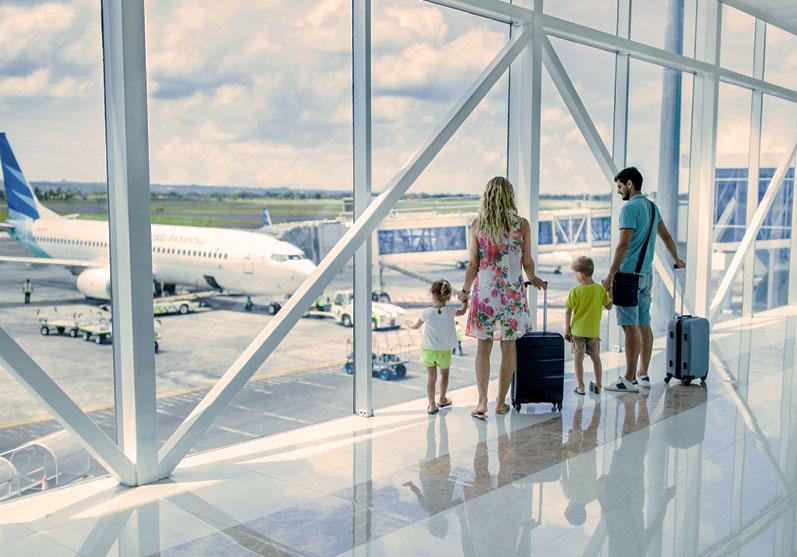
Don’t keep all passports in one place when travelling as a family
Having one member of a family hold onto all passports opens up the possibility for them all to be lost if they are targeted by theft or to be lost due to carelessness.
While you may have to keep track of passports belonging to small children, it is generally advised that all adults and older children in a travelling party hold onto their passports.
If you are a couple travelling with multiple small children, divide the passports between the two of you to minimise the risk of losing them all.
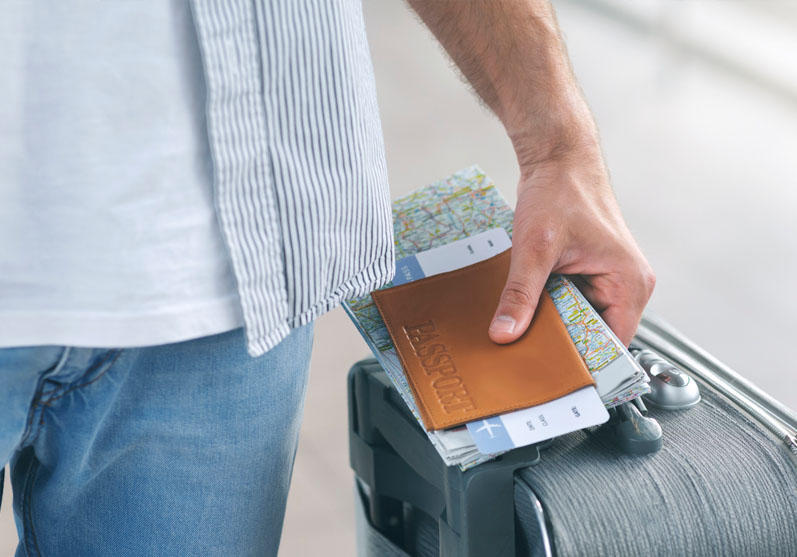
Avoid putting your passport in your luggage
Whether you’re travelling with checked luggage or simply carry-on luggage, a suitcase is no place for your passport.
You cannot get through immigration without your passport. Don’t assume that a passport in your carry-on is safe either, as someone can quite easily grab your bag when exiting the plane or when using an airport shuttle bus, whether they do so by accident or purposely.
Stick to carrying your passport on your body, using your front pocket, a secure undershirt wallet, or some other secure carrying method.
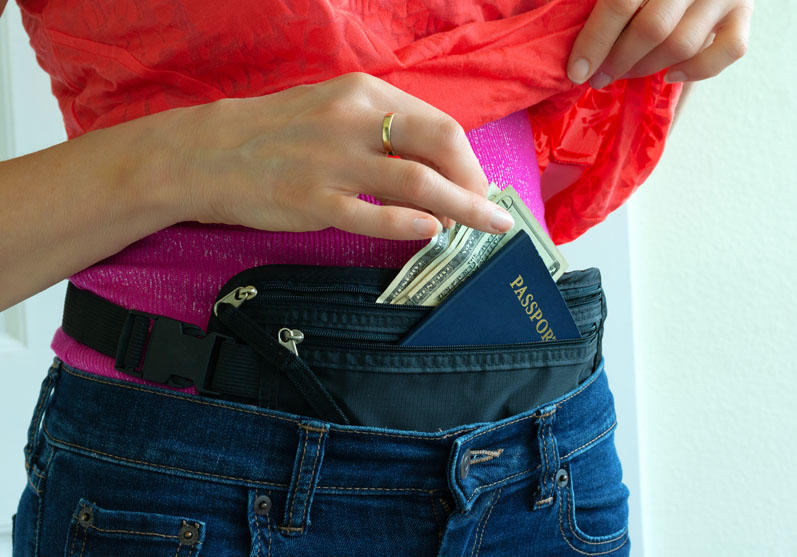
Keeping your passport secure while carrying it
There are many instances while travelling where you will need to have your passport on you, such as at airports, renting an international vehicle, or checking into a hotel.
Additionally, a number of countries require you to always carry a valid form of ID that may be requested by police at any time. You may even be required to show your passport when using domestic trains and flights in certain countries.
While it may not be fashionable for everyone these days to wear a bumbag, there are other ways to safely secure your passport while it’s in your possession. They make theft-resistant backpacks and discreet under-clothing money belts, many of which are equipped with RFID Blocking.
All new Australian passports are ePassports that are equipped with microchips utilising Radio Frequency Identification (RFID) technology. This helps speed up the transmission of passport data, but also may make them a target for hackers looking to steal your important personal details from your passport or credit cards. RFID-blocking purses and backpacks will help avoid this situation.
Always pay attention to your surroundings when pulling out your passport, choosing only private or secure places to do so. This will help deter thieves who may be after your passport and will also help prevent giving away your nationality, which could be important in instances of terrorist attacks where specific nationalities are targeted.
Never keep your passport in the same spot as other targeted items, such as your mobile phone or money, and always choose a hard-to-reach zippered pocket that is closest to your body when storing your passport in a backpack.
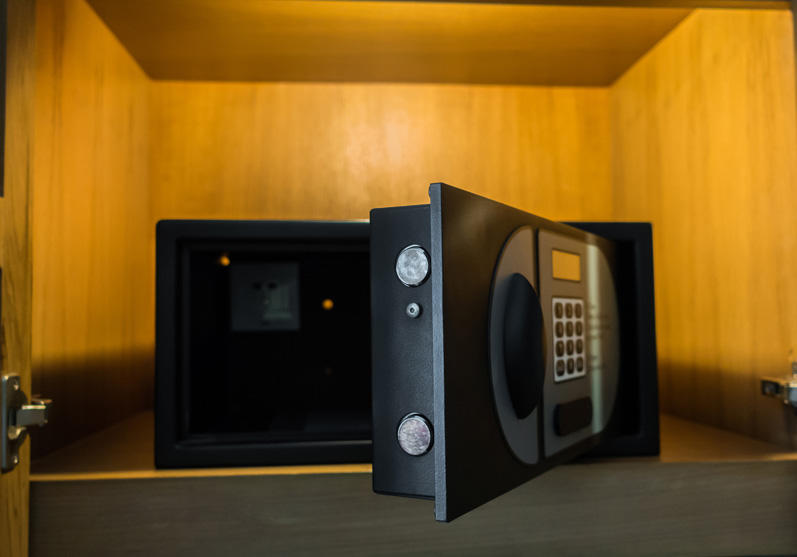
Lock up your passport when not in use
There are, of course, many times when it won’t be wise to carry your passport while travelling.
Whether you’re planning to do some surfing or snorkelling at the beach or want to enjoy some zip lining through the rainforest treetops, there are many activities where having your passport on you will increase the chances of it being lost, stolen, or damaged.
If available, utilise your hotel safe to lock up your passport and other valuables. If your room doesn’t have a safe, you can ask the hotel or hostel reception to store your passport in their main safe. Only do this when staying at reputable accommodation brands.
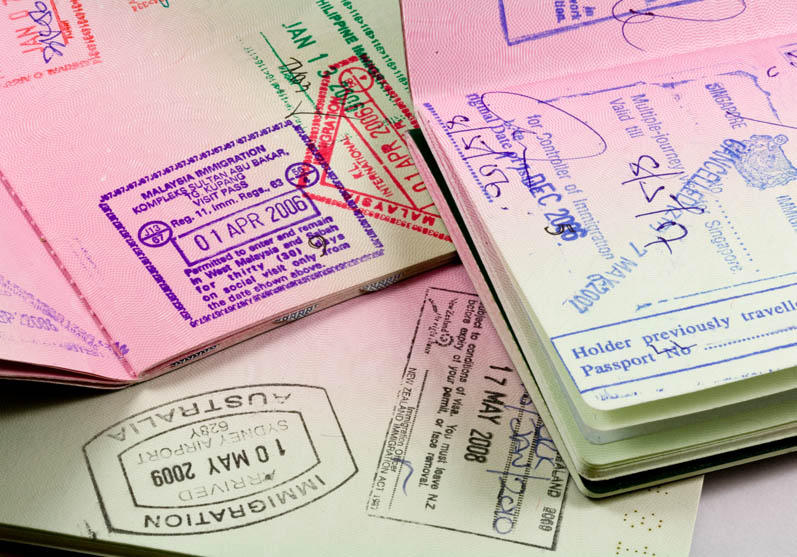
Never surrender your passport to a vendor
While you may be asked by hotels and tour operators to show your passport, very rarely should anyone ever need to hold onto your passport.
Encourage any hotel or tour operator who wishes to hold onto your passport to accept a copy of your passport instead.
This is why it is a good idea to carry several physical copies of your passport, although most establishments should be able to make a copy of your passport themselves.
Be very wary of any company that insists you surrender your passport, as it may be part of some scam.
Avoid passport scams
It is important to be aware of potential scams that may result in your passport being stolen.
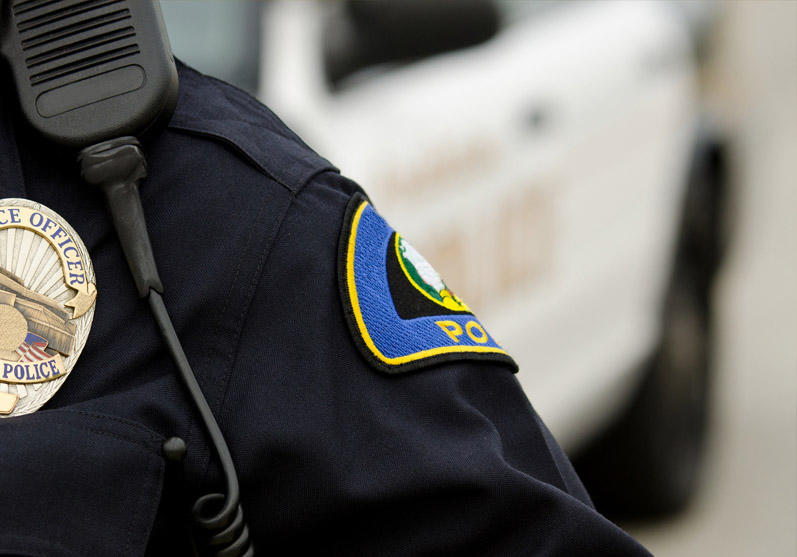
While rare, there are cases of passport thieves disguising themselves as police officers. While you may be able to recognise what Australian police officers look like and their protocols, this can be difficult while abroad.
If a police officer asks you to surrender your passport, ask to see some ID or insist that you be brought to the local police station for further explanation on why you need to hand over your passport.
Other thieves may not be targeting your passport per se, but may simply be after your backpack or other personal belongings.
Always keep tabs on your personal belongings while travelling, and don’t fall victim to distraction techniques used by thieves that are designed to make you lose concentration. Be wary of any stranger who eagerly and relentlessly wants to offer unsolicited assistance or advice, as they may be attempting to steal from you.
Protect your passport from being damaged
While passports are stolen abroad, it’s more likely that you will be the one to put your passport at risk.
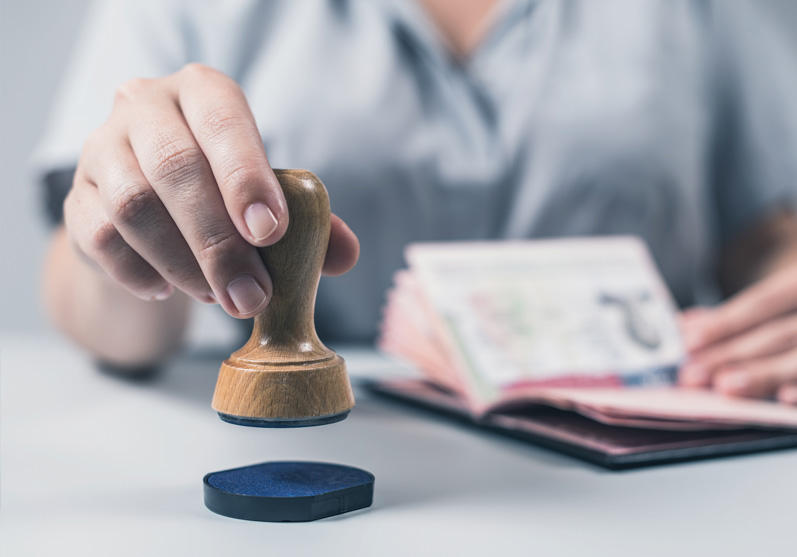
A badly damaged passport can be just as bad as a lost or stolen passport, and our carelessness can lead to our passport being deemed invalid due to its being damaged.
Weather can wreak havoc on your passport, with rain and excessive humidity the main culprits capable of damaging your passport. Excessive heat can also damage your ePassport’s microchip, as can excessively bending your passport.
Nearly everything on your passport needs to be clear and legible, with no signs of tampering or alteration. Countries are becoming stricter about enforcing the need for a clean and crisp passport – your passport may be deemed invalid if pages are torn, stained, or removed.
There have been recent instances of Australian travellers visiting places like Bali who have been denied entry because of badly damaged passports. Invest in a sturdy passport holder that will shield it from the elements and any abuse you may throw at it.
There are many holders that are waterproof, and some sport a durable hard case.
What to do if you lose your passport
Despite all your careful planning and precautions, there may be a time when you do lose your passport abroad.
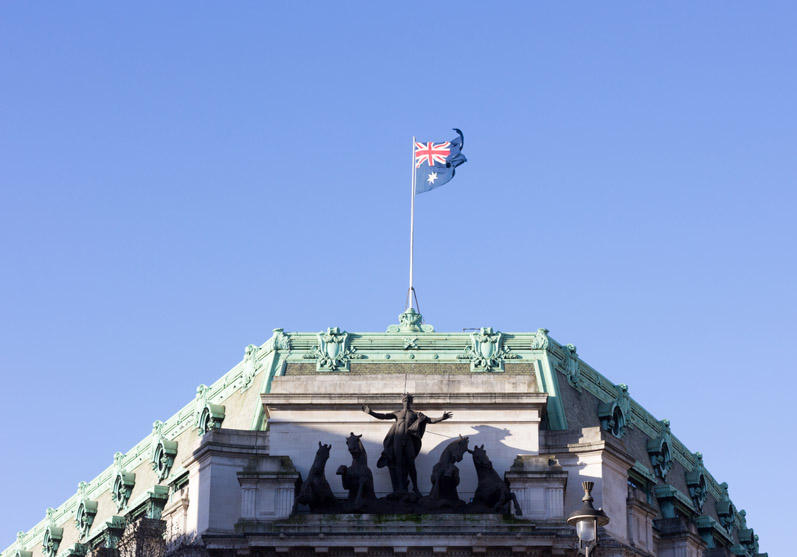
If your passport is lost or stolen while travelling, report it to the local police and the Australian government as soon as possible. Australian embassies and consulates are the point of contact for Australian passport services.
Contact the 24-hour Consular Emergency Centre in Canberra at +61 2 6261 3305 if your passport is lost, stolen, damaged, faulty, or expired. Another helpful number is the Australian Passport Information Service (APIS), which can be reached at 131 232.
Remember to get a copy of the police report after reporting a lost or stolen passport to the local police and immediately contact your travel insurer, who may be able to cover the replacement costs of your passport should you have the appropriate level of cover.
If you happen to find your passport after reporting it lost or stolen to the Australian government, you can no longer use that passport as the government cancels it immediately to prevent criminals from misusing it.
Frequently losing your passport may force the Australian government to place shorter validity periods on your future passports. It is always a good idea to carry extra passport photos with you while travelling in case you need them to get a replacement passport.
In some cases, a temporary emergency passport may be issued, which will have a very short validity period, fewer pages, and no chip like the standard ePassport.
Steps to Buying the Best Travel Insurance for Your Holiday
When shopping around for a great travel insurance policy, it is vital that you choose a provider who is able to offer you full coverage for your holiday. This means taking into account the various risks and factors associated with your trip and deciding how much cover you need for each one. These questions have been designed to help make selecting a travel insurance policy easier and straightforward:
Where am I going?
Your destination(s) will be influential in determining your level of cover. Ensure that the policy you choose is able to cover you for all of the countries you are visiting, including any stopover destinations. You should also check Smartraveller regularly and for any disruptions or warnings about the areas you’ll be travelling to. Insurance providers will not cover your losses if you travel against advice issued by the Australian government.
How long am I going for?
It’s important to find a travel insurance policy that covers you for the duration of your holiday. If you are planning on taking several trips throughout the year, a multi-trip policy may be more beneficial. If you will be travelling for a long period of time (e.g. 1 year), you may want to consider a policy that includes ‘trip resumption’, in case you have to return home to deal with an emergency.
Do I have any pre-existing medical conditions?
Pre-existing medical conditions can influence your travel insurance policy and claims. If you have had any medical problems, try researching a provider who is more flexible about what conditions they will cover, rather than a provider who automatically excludes various illnesses or who charges excessive amounts to cover these illnesses.
How much baggage do I have? What about valuables?
Your baggage and valuables (including your passport) will be of utmost importance, so you’ll need to calculate how much all of your items are worth to determine how much baggage and valuables cover you need. Valuables such as laptops, tablets, cameras and mobile phones may be excluded from some lower-level policies, so make sure your chosen policy includes the items you will be taking. When it comes to items like sports equipment, you will usually be able to upgrade your policy to cover these specific possessions.
What will I be doing on my holiday?
High-risk activities, like skiing, bungee jumping or motorcycling, often mean you need a higher level of insurance cover. If you do plan to engage in certain sports and activities, you’ll need to make sure you have the right level of medical cover in your policy, particularly if there’s a possibility you may injure yourself and/or need medical treatment while on holiday.
What about cover for my kids?
Many people assume that travel insurance for the whole family can be costly, but protecting your children is just as critical as protecting yourself! The best way to save money in this instance is to look for a policy that covers your children for free and gives them protection under the same conditions as your own policy.
What if I get into an emergency while travelling?
Emergencies can be very stressful, and if you need to make a claim, you will want a provider who offers 24/7 phone support and an easy claims process while you’re away. Make sure you investigate this early on when choosing your policy, as it can save you lots of hassle in the long run.
Other things to consider:
- Trip cancellations: If you have to cancel your trip unexpectedly, some policies can offer you reimbursement for some or all of your losses
- Excess: Almost all policies will have an excess, so note these costs before you buy
- Claims: Make sure you understand how the claims process works. Most companies will require you to submit any claims within a certain timeframe once your trip is over or your policy has ended, and you’ll usually need to present documentation, such as receipts, police reports or medical certificates.
- Exclusions: Ensure you are aware of all exclusions in your travel insurance policy relating to areas such as medical, health conditions, cancellations, baggage, valuables and activities etc; all exclusions will be listed in your Product Disclosure Statement (PDS) and it is extremely important that you read this document carefully before purchasing.
To make sure you have chosen the right policy for your trip, make sure to read the Product Disclosure Statement (PDS) or contact our customer service agents before you buy to understand your options.
Beautiful beach camping destinations in Australia for the summer
January 31, 2017
These beach camping destinations around Australia are gorgeous, and they’re some of my favourites. Here’s where to go to sleep (and wake up!) this summer by the sea:
Whitehaven Beach, Queensland
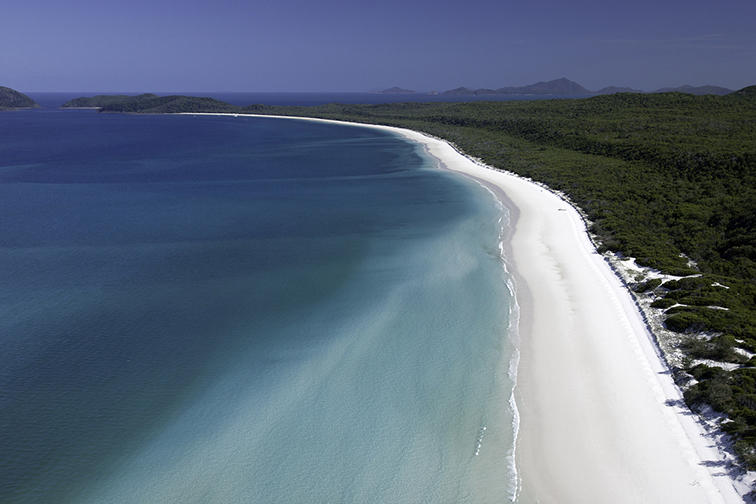
You’ll find a gorgeous array of beach camping sites in the Whitsundays, but one of the standouts is Whitehaven. Pristine white sands and glistening blue waters await, with the campsite and toilets nestled in the bush just metres back from the beach. It’s only small (with seven sites), so book early to grab a spot.
Marion Bay, South Australia
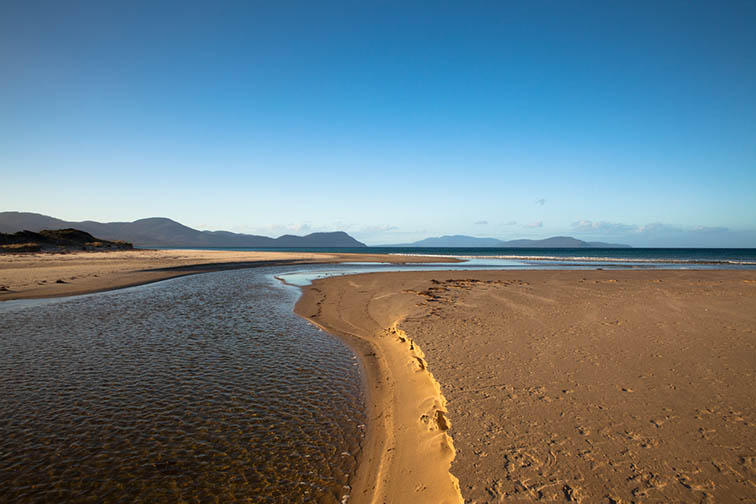
On the very tip of the Yorke Peninsula you’ll find the Innes National Park and magnificent Marion Bay. The caravan park here is perfect for camping, caravanning and even cabin-staying.
Most sites are powered and facilities include toilets, hot showers, kitchen/BBQs, a children’s playground, washing machines and a kiosk. Out the front you’ll also find the beach – which is ideal for both swimming and fishing.
Rottnest Island, Western Australia
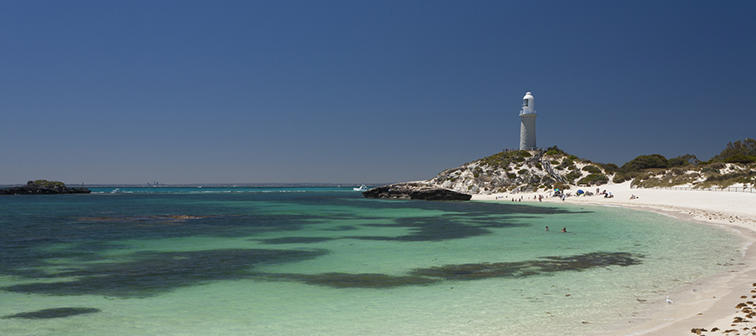
One of the most beautiful destinations in WA, Rottnest Island’s campground, is just a short walk from the infamous Basin swimming spot. There are 43 sand-covered sites that are powered, as well as kitchen, BBQ and toilet facilities. You can even get your luggage delivered to the campsite straight from the ferry!
Sites can be booked up to 18 months in advance and a maximum of six people are allowed on each site.
Cave Beach, New South Wales
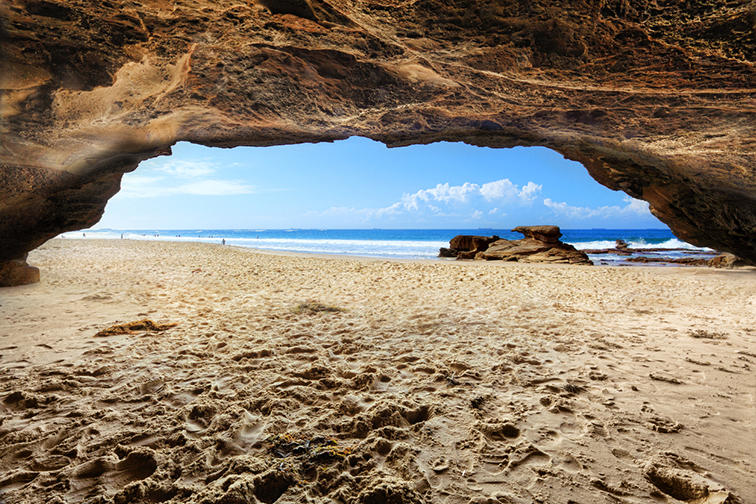
When it comes to the Booderee National Park on breathtaking Jervis Bay most people will tell you to head to Cave Beach. This is an idyllic camping spot but bear in mind it’s only suitable for campers that pack light (you have to carry your equipment in, about 300m) and only small tents are allowed.
Facilities are good with toilets, cold-water showers, BBQs and running tap water.
Apollo Bay, Victoria
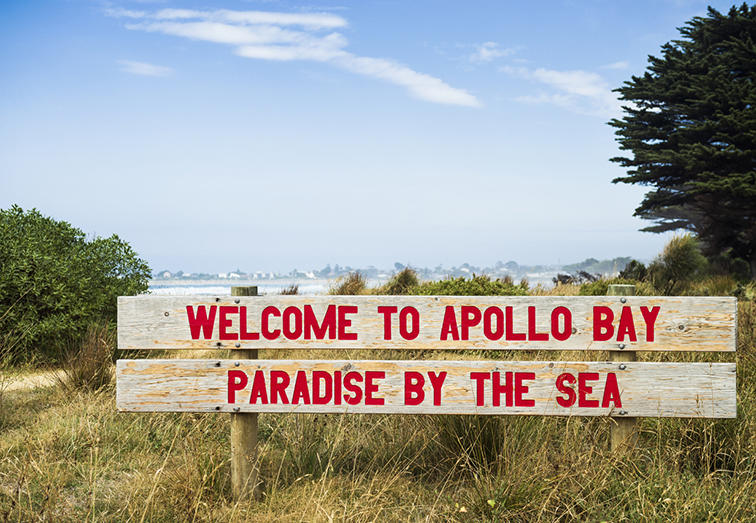
No trip to Victoria is complete without a journey along the Great Ocean Road. And there’s no better place to stop for camping than at Apollo Bay overlooking the beach and the Twelve Apostles.
The Big4 Pisces Park offers a range of cabins and campsites, not to mention a pool, a games room and a kids’ playground. There’s also excellent access to waterfalls and rainforest treks, as well as the centre of town.
Fortescue Bay, Tasmania
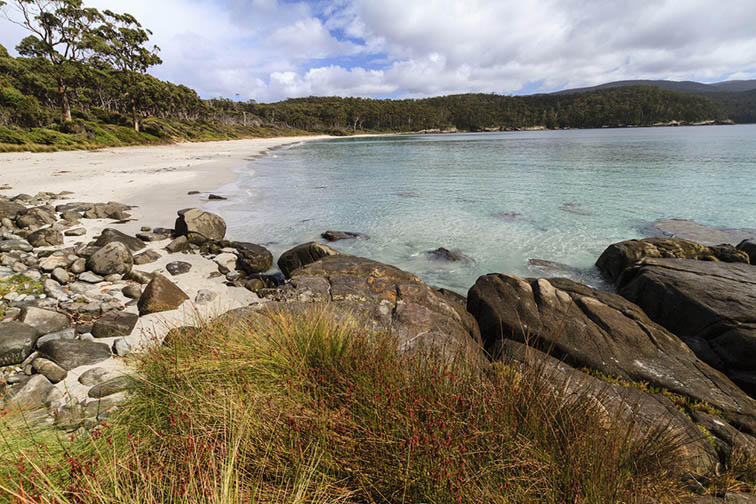
Yes, you can find exquisite white-sand beaches in Tassie! The beach at Fortescue Bay is one of them and it’s only a 1.5 hour drive from Hobart. There are two great campgrounds here; Banksia is perfect for tent camping, while Mill Creek is where you want to be if you have a caravan.
There are toilets, BBQs, fireplaces and even a basic shop on site, and bookings are needed to secure a spot. You’ll find yourself in the Tasman National Park, so there’s no shortage of things to do! Key sights include the Tasman Arch, Waterfall Bay and Remarkable Cave.
Remember that protecting your trip with travel insurance is essential, even when travelling within Australia. Check out InsureandGo’s Domestic Travel Insurance.
Common Travel Scenarios & how to deal with them
We love it when our customers experience lots of fun and excitement on their holidays. But no matter where you go, we also know that things can sometimes take a turn for the worse.
Below are some of the most common scenarios we encounter – and how you can deal with them if they happen to you while travelling:
1. You get sick or injure yourself
If an illness or injury occurs, your first priority should be to take care of yourself. Seek medical attention if necessary and call our 24/7 reverse charge support line as soon as possible. If you’re not experiencing an emergency, it is a good idea to contact InsureandGo before you see a doctor or pay for any type of treatment so that we can organise a ‘guarantee of payment’ for you if necessary.
Tip: Don’t forget to retain all your receipts, reports and medical advice after treatment. These will be crucial for approving your claim.
2. You are robbed
You should report any thefts to the local police immediately (or at least within 24 hours). Ask them to issue you with an official police report and contact us at your earliest convenience to make a claim. If something critical, like your passport, has been stolen, we can also help you get in touch with the local consulate to arrange for replacement documents.
Tip: Make sure your insurance policy covers the belongings/valuables you are taking on your trip. In general, don’t take anything with you that you aren’t willing to lose.
3. Riots breaks out near you
It is important that you do not get involved in any riots or violent activity while travelling.
If a riot or another violent event occurs, you should avoid the area in general. If you find you are staying in the midst of a riot area, do not leave your hotel. If you cannot return to your hotel room due to a riot, contact InsureandGo immediately. We will determine the next steps to help you relocate and/or stay safe.
Tip: Check Smartraveller before you leave home for any riot/violence warnings. You should also make an effort to stay on top of local news/movements while travelling, especially in countries where unrest can be common.
4. Pre-paid activities, sports or tours are cancelled
If something you pre-booked/paid for is cancelled, either due to the fault of the operating company or other extenuating circumstances (e.g. weather), you may be eligible for a refund, depending on your specific travel insurance policy.
Make sure you obtain written confirmation of the cancellation from the provider. You should then make a claim with InsureandGo or contact us to find out if your policy allows you to be reimbursed.
Tip: Make sure any activities or sports you choose to partake in are covered by your individual policy. All activities must be run by a legitimate and licensed operator to be eligible for cover.
5. You want to rent a vehicle
Sometimes, the ease of self-driving can be more beneficial than taking public transport while overseas.
If you decide to rent a car, you’ll need to:
- Check that you have the right insurance cover, including the rental excess waiver; you can call InsureandGo if you’re unsure or if you want to upgrade your policy
- Make sure you have the correct driver’s licence and/or International Driving Permit to be able to drive in the country you are in
- Obey all speed limits and road rules while driving, including wearing seatbelts
- Comply with all terms and conditions listed in your rental contract; if you don’t, you won’t be covered by your insurance
If you want to hire a scooter or motorcycle or another type of large or off-road vehicle, we recommend you
- Check your travel insurance policy to determine what you are/aren’t covered for
- Hold the correct driver’s licence and/or International Driving Permit for that country
- Always wear a helmet – this applies to both yourself and any passengers
- Adhere to road rules and speed limits and never drive while intoxicated
- Ensure you can handle any vehicle excesses if an accident occurs, as this won’t be covered by your insurance policy
6. You decide to be spontaneously adventurous
Participating in adventure sports and activities overseas can be loads of fun. However, you’ll want to make sure that your new activities are all covered under your travel insurance package. If they aren’t or if you’re unsure, simply contact InsureandGo on our 24/7 support line and we can tell you what’s covered and what’s not.
Tip: Don’t engage in any sports or activities unless they are organised by a certified, licensed and legitimate provider. If they are not, your insurance may not cover you if anything goes wrong.
Have you got a question about how to handle a travelling problem or incident? Contact InsureandGo on 1300 401 177 or Reverse Charge +61 2 9333 3999 if you are overseas and experiencing an emergency.
Travel Delays – When can you claim on your travel insurance?
Travel delays (ugh!). They are one of the great frustrations of travelling. We often don’t fully understand why they happen (and sometimes we don’t care). But the fact is – they do come around once in a while and there’s not much you can do.
The good news, though, is that while you’re sitting around in the airport, you can potentially get some money back from your Travel insurance.
Travel delays & travel insurance
First, a few ‘common sense’ things about travel delays and travel insurance.
- Travel insurance covers you for delays on your departing flight from Australia and your flight returning to Australia – it doesn’t cover delays on your other flights overseas.
- Your travel delay cover applies to flights only, not other modes of travel. So, if you’re leaving on a cruise, for instance, you should take out cruise travel insurance instead, which will cover your cruise delays.
- You can’t claim if you don’t check in or go on the trip at all. If your flight ends up being delayed and you decide not to travel altogether, you won’t be able to claim (since you didn’t actually travel).
How do travel delay claims work?
- In most cases, a travel insurer will pay you a set amount of money (e.g. $100) for every completed block of time (e.g. 12 hours) when your flight is delayed.
- So, if your flight is delayed by, say, 24 hours – your claim would be $200
- The funds can go towards essential items caused due to the delay, such as meals or toiletries you’ve had to buy because you’re stuck at the airport or even something like transit accommodation.
What kinds of delays are covered?
- You’re covered if your flight is delayed because of unexpected bad weather, a mechanical problem, a strike or industrial action.
- If you want cover for natural disasters, you’ll need to check the appropriate box on the final checkout page when you buy your policy. If you do, you’ll be able to claim for delays due to unforeseen natural disasters under ‘Additional Emergency Expenses.’
- Note that if you are aware of anything that could disrupt your flight when you buy your policy, you won’t be able to claim. For example:
Daniel is going to Mexico for a wedding and suddenly finds out that there will be a strike on the day he is flying out. He rushes to take out travel insurance, but because the strike was already public knowledge, he won’t be able to make a claim if his flight is delayed.
How do you claim?
In most cases, all you need is a letter or written statement from the airline carrier that includes the reason for the delay and how long it lasted for.
The insurance provider will then determine how much money you’re able to get back, which will ultimately be dependent on the policy and level of cover you took out.
Have another question about travel delay cover? Just call us on 1300 552 701 or grab a quote to find out how much you could be covered for.
Bali Travel Tips: Things To Know Before You Go
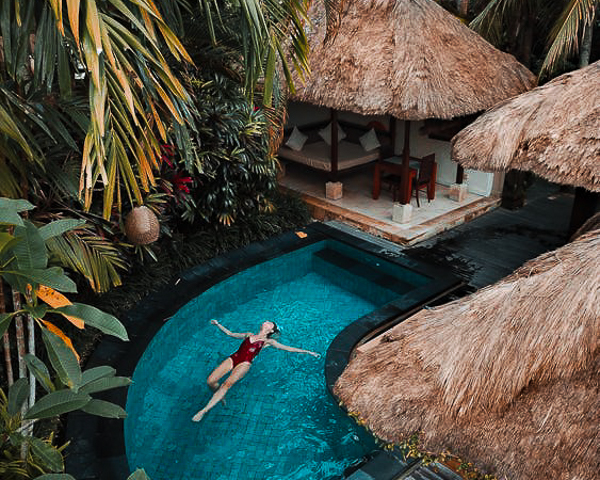
Bali is one of Indonesia’s most beautiful destinations and it’s a favourite of many Australian travellers! If you do plan to travel to Bali or if you’re already there (lucky you), here are a few Insure&Go tips to help you stay safe and avoid any unpleasant situations:
1. Bali belly
Bali Belly, otherwise known as traveller’s diarrhoea, is a common illness that you can easily pick up in Bali (and Asia in general). If you’re keen to dodge Bali Belly, you should avoid drinking tap water (use bottled water for drinking and cleaning your teeth) and stay away from street/vendor food (especially if it has not been cooked in front of you).
Raw foods, pre-peeled fruits and veggies and cooked foods that have been left out for too long should also be avoided.
If you do end up with Bali Belly and need to see a doctor, you should contact Insure&Go beforehand to assist with your medical expenses.
2. Scooter accidents
Scooters are a dime a dozen in Bali and riding one can be lots of fun. However, you’ll need to make sure that:
- You hold a valid Australian driver’s licence and any necessary licence/ permit appropriate for Bali; it is also highly recommended to apply for an International Driving Permit (you can apply for this permit in Australia) to avoid running into any unfortunate situations
- You wear a helmet at all times
- You never drive while intoxicated or under the influence
- You obey all road rules, including speed limits, and operate the scooter correctly
If you do not stick to these regulations, you may affect your eligibility if you need to make a claim.
If you do experience an accident in Bali, you’ll need to contact Insure&Go immediately and gather as much evidence about the accident as possible (photos, videos, witness statements). If you are injured, however, make sure seeking medical help is your top priority.
3. Snorkelling & scuba diving
Insure&Go covers up to 90 sports and activities under all of its insurance policies, including scuba diving and snorkelling. If you do plan to dive or snorkel in Bali, you should double-check that your chosen activity is covered by your particular policy.
In relation to diving, there are certain regulations that determine what you are covered for. For instance, you will need to dive with a qualified instructor or be a qualified/certified diver yourself. You’ll need to always dive with at least one other person (never alone) and you are only covered for dives of up to 30 metres. More on diving travel insurance.
4. Theft
Theft can be common anywhere in the world, including in Bali. Ensure your belongings are with you at all times and never leave your valuables or baggage unattended. Use the safe in your hotel room if it is provided and/or lock your bags and suitcases when you go out.
When travelling around Bali, keep your belongings with you in a zippable bag and make sure the bag stays close to your body while travelling and walking about.
If your possessions are stolen or become lost in Bali, contact us as soon as the incident occurs and file a report with the local police within 24 hours.
5. Respecting religion & customs
Indonesia has a diverse range of religions and it’s important that you respect all beliefs and customs while holidaying in Bali. While many religions are accepted, the government does not recognise atheism or agnosticism (do not say you are one of these) and blasphemy against any religious activity or belief (including God in general) is considered illegal.
In terms of behaviour, you should also remain pleasant and polite while in Bali and avoid any hostile or negative behaviour. You should also avoid public displays of affection (hugging, kissing, touching).
6. Taking medications into Bali
Indonesia has extremely strict customs and laws regarding medication and other drugs, so you should ensure that anything you take with you into Bali is acceptable and legal.
Carry doctor’s certificates, original packaging and prescriptions with you and mark your medication as being for ‘personal use’ on any customs forms. Keep in mind that you can obtain many over-the-counter medications (e.g. headache pills) in Bali as well.
7. Declaring Pre-existing conditions to Insure&Go
At Insure&Go, we’re willing to consider all pre-existing medical conditions.
Declaring any pre-existing condition you have had in the past five years when taking out travel insurance is vital for ensuring any claims impacted by pre-existing conditions you make in relation to your Bali trip will be valid. If you are unsure, it’s best to disclose any conditions with Insure&Go beforehand and we can assess whether it can be covered by us.
Planning a holiday in Bali or another tropical trip? Insure&Go has a range of travel insurance options to keep you covered. Compare our travel insurance options and the different levels of cover here.