

In this Guide
Packing light is one of those travel skills that sounds simple but takes a bit of practice to actually pull off. Get it right, and you'll glide through airports, skip the baggage carousel entirely, and arrive feeling like you've got the whole trip under control. Get it wrong, and you're wrestling an overstuffed suitcase through cobblestone streets, wondering why you packed four pairs of shoes.
Baggage fees have also climbed steeply in recent years. Across airlines worldwide, checked luggage costs have risen sharply, and budget carriers flying popular Australian routes are among the strictest enforcers. Travelling carry-on only, or at least cutting down to one checked bag, can save you a meaningful amount on a return trip.
This guide covers everything: choosing the right bag, building a travel wardrobe that actually works, cutting down your toiletries, and the gear worth investing in before your next trip.
Whilst you’re packing (or thinking about it), don’t forget to consider travel insurance before you head off! So, if your bag does get lost or delayed, you're not scrambling to cover the cost of replacing what's inside.

1. Start with a plan, not a pile
The biggest packing mistake most travellers make is starting with an empty bag and filling it. Start with a list instead.
Before you open your wardrobe, research your destination. The climate, the activities you've booked, the dress codes at any restaurants or venues, and whether your accommodation provides things like towels, hairdryers, or laundry facilities. A hotel in Tokyo will almost certainly have a hairdryer. A surf hostel in Bali probably won't. Knowing this upfront stops you from packing things you'll never touch.
Write a packing list specific to your trip. Not a generic one you copy from a website. Think day by day, if that helps: what will you actually wear on arrival day? What do you need for that hiking day? Anything that doesn't serve a purpose on a specific day gets cut.
Also, check your airline's carry-on rules before you start. Allowances vary more than most people realise. Jetstar, for example, has stricter carry-on size and weight limits than Qantas or Virgin Australia, and budget carriers on international routes can be even less forgiving. Check the dimensions and weight limit for every flight on your itinerary, not just the first one.
2. Choose the right bag
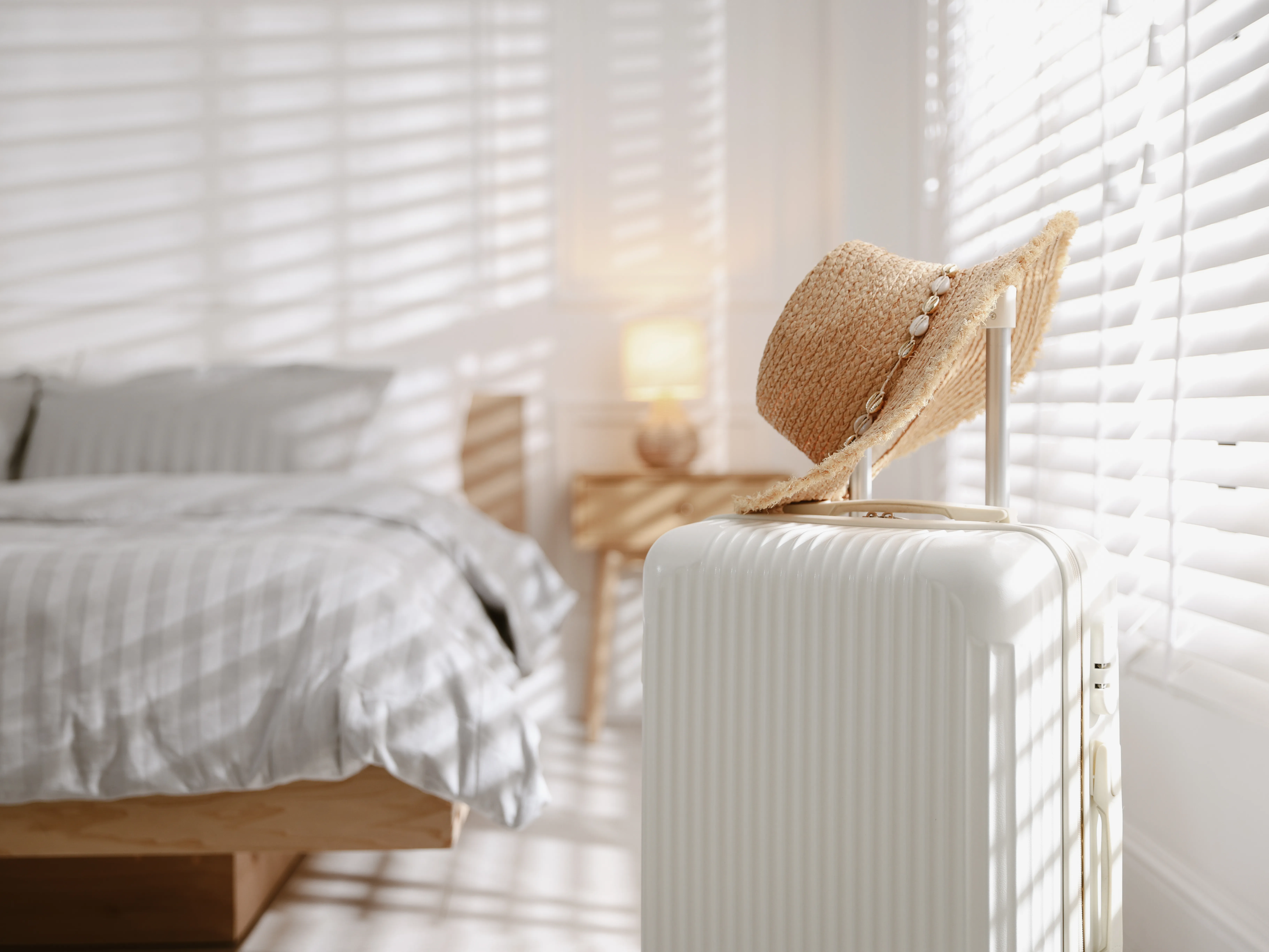
Your bag choice sets the ceiling for everything else, pick the wrong one, and you're fighting it the whole trip.
Carry-on suitcase vs backpack
Hard-shell suitcases look great, but the shell, retractable handle, and wheels can collectively add one to two kilograms before you've packed a thing. For carry-on only travel, a lightweight soft-shell bag or a well-structured travel backpack will almost always serve you better.
A good travel backpack. Something in the 35–45 litre range fits within most airline carry-on dimensions, sits comfortably on your back through airports and on public transport, and doesn't require you to lift it into an overhead locker on an angle. Brands like Osprey, Nomatic, and Aer make bags built specifically for this style of travel.
If you prefer a wheeled bag, look for one with a lightweight aluminium frame rather than a heavy steel one, and check the empty weight before you buy. Anything over 3kg empty could cause you problems on stricter airlines.
Organisation matters
Look for a bag with a logical layout. A main compartment you can actually pack efficiently, a dedicated laptop sleeve if you need one, and a couple of accessible outer pockets for things you want on the plane. Bags with dozens of tiny pockets sound useful but tend to make things harder to find and eat into your usable space.
3. Build a travel wardrobe that works harder
Clothing is where most bags go wrong. The fix isn't necessarily packing less; it's packing smarter.
The capsule wardrobe approach
A travel capsule wardrobe means picking a small set of versatile pieces that mix and match into multiple outfits. Stick to two or three neutral colours, navy, grey, white, black, or tan, so everything works together! A pair of dark jeans, 2 or 3 tops, one lightweight layer, and a versatile pair of shoes will cover most situations on a one to two-week trip.
A useful question to ask before anything goes in the bag: can this item do at least two jobs? A linen shirt works for a day of sightseeing and a casual dinner. A merino wool top can be worn multiple days without smelling. A lightweight jacket doubles as an extra layer on a cold flight. If something has only one use, it probably doesn't need to come.
How to pack clothes efficiently
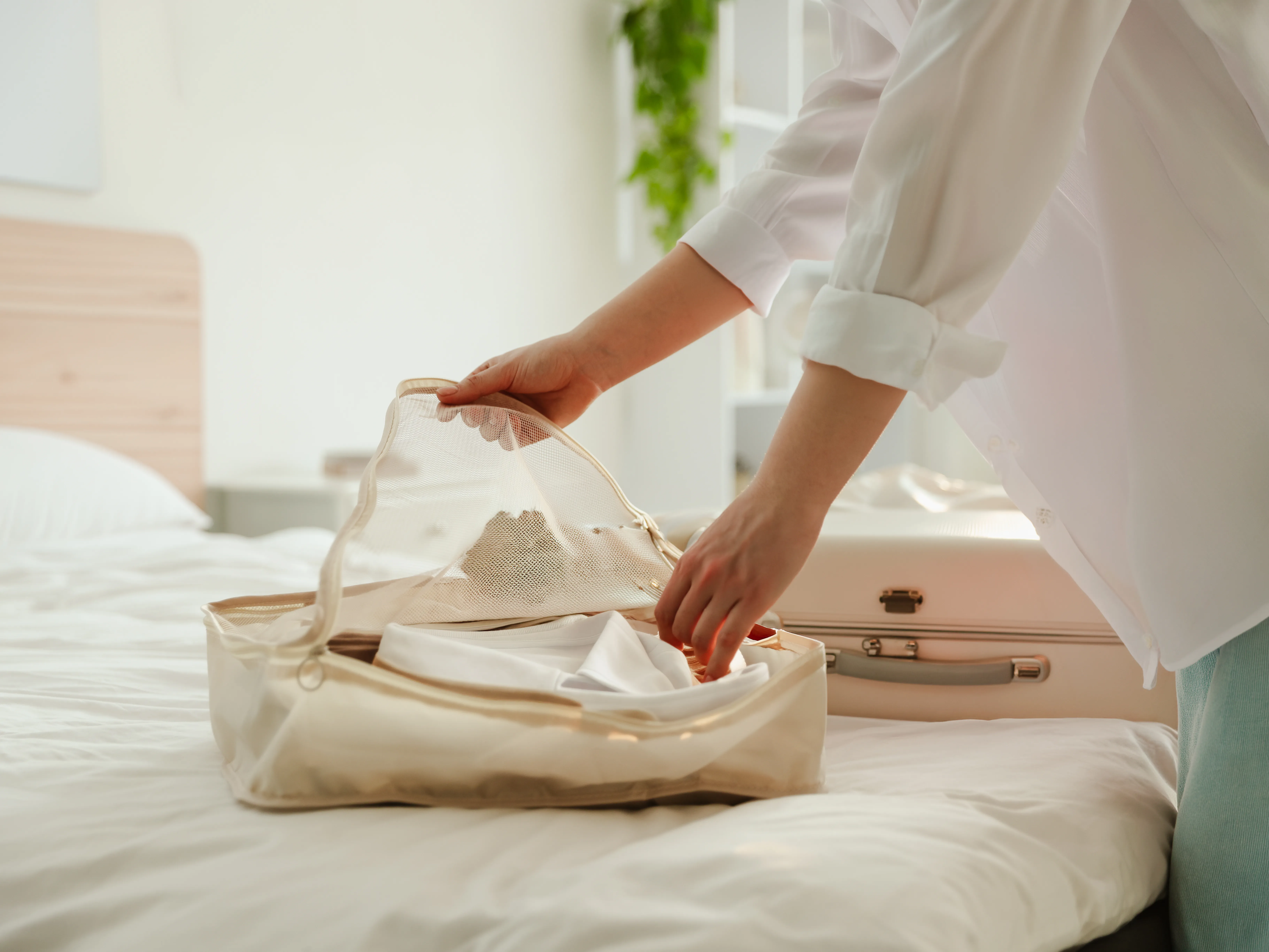
Rolling clothes rather than folding them saves space and reduces wrinkles, especially for t-shirts, jeans, and casual gear. Packing cubes are worth investing in: they compress clothing, keep your bag organised, and make it easy to find things without unpacking everything. Use one cube per category, tops, bottoms, and underwear, and you'll never dig through a chaotic bag again.
On travel days, wear your heaviest and bulkiest items, thick jacket, heavy shoes, chunky jumper. It looks slightly ridiculous, but it actually works and goes unnoticed!
Plan to do laundry
The real secret to packing light on longer trips is accepting that you'll do laundry. Most hotels have a laundry service. Laundromats are easy to find in almost every city. Many Airbnb’s have a washing machine. Packing for five or six days and doing one wash mid-trip is almost always easier than hauling two weeks of clothes across multiple cities.
4. Plan to do laundry
Clothing is where most bags go wrong. The fix isn't necessarily packing less; it's packing smarter.
The capsule wardrobe approach
A travel capsule wardrobe means picking a small set of versatile pieces that mix and match into multiple outfits. Stick to two or three neutral colours, navy, grey, white, black, or tan, so everything works together! A pair of dark jeans, 2 or 3 tops, one lightweight layer, and a versatile pair of shoes will cover most situations on a one to two-week trip.
A useful question to ask before anything goes in the bag: can this item do at least two jobs? A linen shirt works for a day of sightseeing and a casual dinner. A merino wool top can be worn multiple days without smelling. A lightweight jacket doubles as an extra layer on a cold flight. If something has only one use, it probably doesn't need to come.
How to pack clothes efficiently
Rolling clothes rather than folding them saves space and reduces wrinkles, especially for t-shirts, jeans, and casual gear. Packing cubes are worth investing in: they compress clothing, keep your bag organised, and make it easy to find things without unpacking everything. Use one cube per category, tops, bottoms, and underwear, and you'll never dig through a chaotic bag again.
On travel days, wear your heaviest and bulkiest items: a thick jacket, heavy shoes, a chunky jumper. It looks slightly ridiculous, but it actually works and goes unnoticed!
Plan to do laundry
The real secret to packing light on longer trips is accepting that you'll do laundry. Most hotels have a laundry service. Laundromats are easy to find in almost every city. Many Airbnb’s have a washing machine. Packing for five or six days and doing one wash mid-trip is almost always easier than hauling two weeks of clothes across multiple cities.
5. Cut your toiletries down
Full-sized bottles are one of the easiest things to cut. Decant products into small reusable silicone containers. They're cheap, leak-resistant, and hold everything you actually need. And for most destinations, things like shampoo, conditioner, sunscreen, and moisturiser are easy enough to buy on arrival and often cheaper locally anyway.
If you're flying carry-on only, remember that liquids, aerosols, and gels must be 100ml or under per container and fit in a single clear 1-litre bag, this is enforced at Australian airports and most international ones. Buying products at your destination sidesteps this entirely.
Solid alternatives: shampoo bars, solid conditioner, and solid sunscreen sticks have improved dramatically in recent years and are worth trying if you travel regularly. They don't count toward your liquid allowance and take up almost no space.
6. Be selective with electronics
Only bring what you'll genuinely use. A smartphone, and a laptop or tablet if you actually need one for work, covers most trips without issue. Consider leaving bulky items like hair dryers and straighteners at home, using the ones provided by your accommodation if available.
Your phone is your most powerful travel tool. It can be your camera, your map, your translator, your boarding pass, and your entertainment. Before packing a separate camera, honestly consider whether your phone camera is good enough for what you actually want to photograph. For most people on most trips, it is. For those more into photography, maybe not.
A universal travel adapter and a small power bank cover most charging needs without requiring a bag full of individual chargers and cables. Pack all cables and chargers in a single small pouch so you're not rooting around for them at every hotel.
Before packing a hairdryer or hair straighteners, check whether your accommodation already provides one. Most hotels provide them. Airbnb listings usually mention it, or you can easily confirm with the host. It's one of the heavier things people carry for no reason.

7. Must‑Have Travel Gear for Your Next Trip
A few well-chosen items make a real difference to how much space you save and how comfortable the trip is.
A compact microfibre travel towel takes up about as much space as a thick sock, dries in minutes, and works as a beach towel or picnic blanket depending on the day. A lightweight packable daypack, one that folds into its own pocket, is useful if you're doing day trips or hiking without wanting to drag your main bag around.
A scarf or sarong is one of those things that keeps solving problems: wrap on a cold flight, cover-up at a temple, beach layer when you need one. Collapsible water bottles and ultra-compact umbrellas are both easy to find and genuinely earn their space.
If you like to keep up with training while you travel and won't have access to a gym, resistance bands weigh almost nothing and cover more than most people expect.
8. Be choosy with souvenirs
The best souvenirs are usually the photos. They weigh nothing and don't need to fit in a bag. But when you do want to bring something physical home, a practical rule applies: if it doesn't fit comfortably in one hand, think carefully before buying it.
Postcards, jewellery, locally made stationery, and small ceramics travel well. Anything fragile, bulky, or heavy is a problem waiting to happen on the trip home.
If you fall in love with something larger, ask the shop if they can post it. Many tourist shops in popular destinations will wrap and mail purchases internationally for a reasonable fee. It's often cheaper and safer than trying to get it home in your luggage. If you're checking a bag home specifically for souvenirs, factor that cost in before you buy.
Final thoughts
Packing light gets easier every trip. The first time you walk off a plane with just a backpack and head straight to the taxi rank while everyone else waits at baggage claim, you'll wonder why you ever checked a bag at all.
Start small. Try a short trip with only a carry-on first and build from there. Most people come back surprised at how little they actually needed.
Before any trip, as part of your planning, including packing light, it’s also worth considering travel coverage. InsureandGo Australia makes it easy to compare travel insurance options so you can travel with added peace of mind.